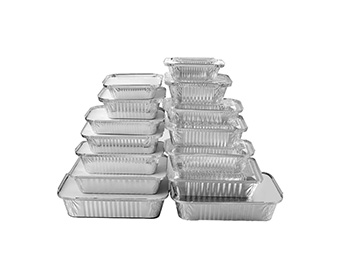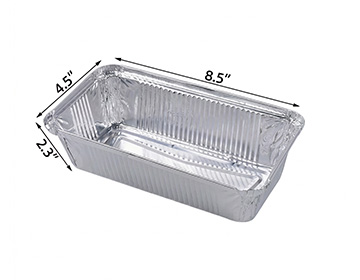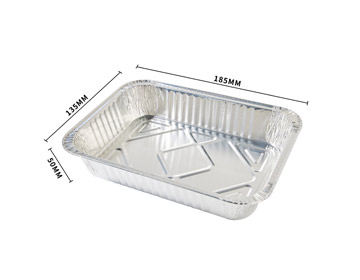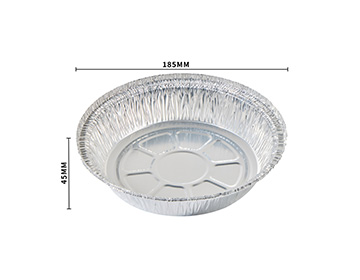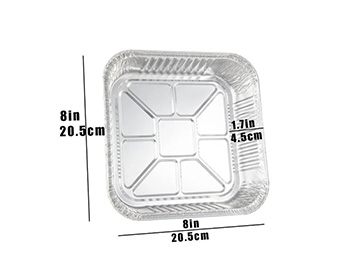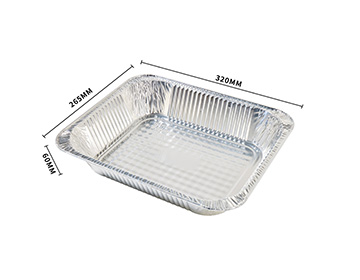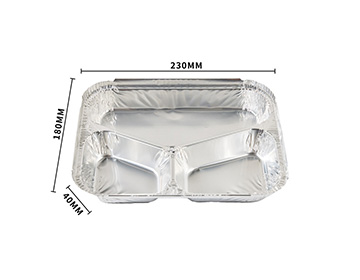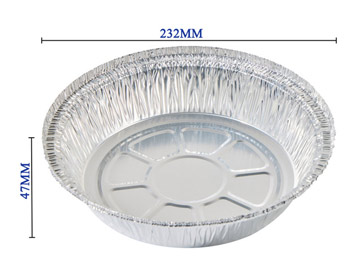
Are Aluminum Foil Containers Oven Safe? Temperature, Uses and Safety Tips
Yes, most aluminum foil containers are suitable for use in conventional ovens and convection ovens. They are widely used for baking, reheating, preparing frozen meals and packaging ready-to-eat foods.
Aluminum is a good conductor of heat and can withstand typical oven cooking temperatures without melting or losing its basic structure. This makes aluminum foil containers a practical choice for food manufacturers, catering companies, bakeries and food packaging distributors.
However, not all foil containers are designed for exactly the same applications. Their performance depends on factors such as material thickness, container size, structure and the type of lid or coating used.
In this guide, we explain how aluminum foil containers perform in different ovens, what precautions to take during heating, and how to choose the right container for commercial food packaging.
1. Can You Put Aluminum Foil Containers in the Oven?
Yes. Aluminum foil containers can generally be placed directly in conventional ovens and convection ovens.
They are commonly used for baking, cooking and reheating food because aluminum maintains its structural properties under normal oven cooking conditions.
Typical applications include:
● Frozen ready meals
● Lasagna and pasta dishes
● Roasted vegetables
● Cakes, pies and pastries
● Takeaway and catering meals
● Prepared foods for reheating
One advantage is that food can often be prepared, stored and reheated in the same container. This reduces the need to transfer food between different packages and makes handling more convenient for food service businesses.
For lightweight containers, placing the foil tray on a rigid baking sheet before filling or heating can provide additional support. Always check the manufacturer’s instructions for the recommended application and temperature range.
2. Why Are Aluminum Foil Containers Suitable for Oven Use?
Aluminum has several physical properties that make it suitable for food packaging applications involving heat.
1. Good Heat Resistance
Aluminum foil containers can withstand the temperatures commonly used for baking and reheating food.
Unlike many conventional plastic food containers, aluminum trays do not soften under normal oven cooking conditions. They retain their basic shape and can be used for direct oven heating when designed for that purpose.
Actual performance depends on the container’s thickness, dimensions, construction and any additional materials used in the packaging.
2. Efficient Heat Transfer
Aluminum conducts heat efficiently, allowing heat to pass through the container and reach the food.
This property makes aluminum foil trays suitable for products that require baking or reheating, including pies, lasagna, roasted dishes and prepared meals.
For food manufacturers, consistent container dimensions and material specifications are important when developing standardized heating and cooking processes.
3. Lightweight and Easy to Handle
Aluminum foil containers are lightweight compared with many rigid food packaging alternatives.
They can be stacked for storage and transportation, helping businesses manage packaging space in commercial kitchens, catering operations and food production facilities.
Their low weight also makes them practical for takeaway meals and portion-controlled food packaging.
4. Protection Against External Factors
Aluminum provides an effective barrier against light, moisture and oxygen when used as an appropriate packaging material.
This makes it useful for food products that require protection during storage and transportation.
The actual shelf life of packaged food also depends on the food itself, sealing conditions, processing methods and storage temperature.
3. How to Use Aluminum Foil Containers in Different Ovens
Although aluminum foil containers are suitable for many oven applications, buyers and end users should understand the differences between heating appliances.
Conventional Ovens
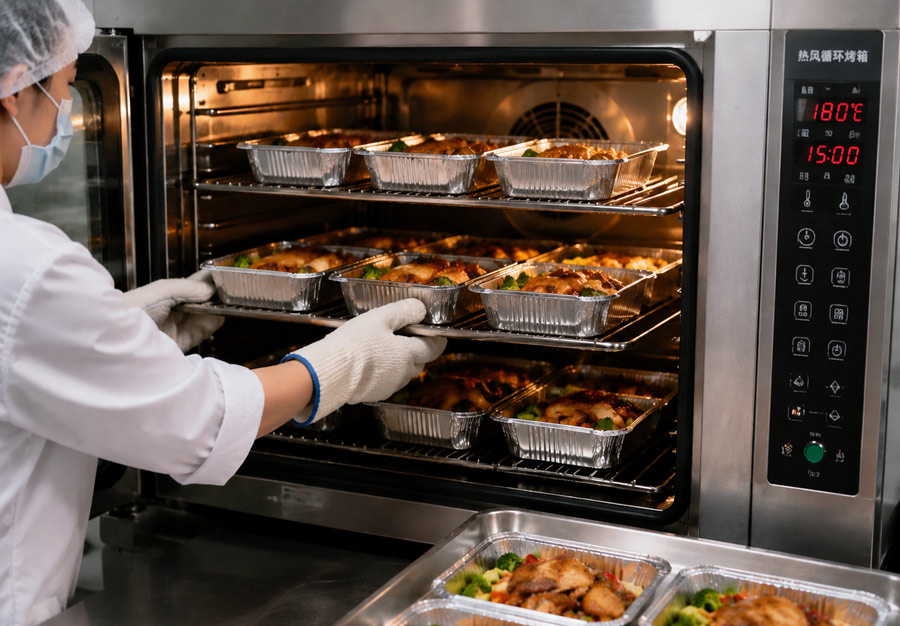
Conventional ovens are one of the most common applications for aluminum foil food containers.
They can be used for baking, roasting and reheating various food products. Place the container on an oven rack or baking sheet according to its design and the manufacturer’s instructions.
Avoid direct contact with heating elements.
Convection Ovens
Aluminum foil containers can also be used in convection ovens.
These ovens circulate hot air to distribute heat throughout the cooking chamber. Aluminum trays are suitable for many convection baking and reheating applications.
For lightweight trays, a baking sheet can help prevent movement when the oven fan is operating.
Toaster Ovens
Some aluminum foil containers can be used in toaster ovens, provided their dimensions and materials are suitable.
Check that the container does not touch the heating elements, walls or other internal components. Small toaster ovens may have limited clearance, so container size is particularly important.
Microwave Ovens
Standard aluminum foil containers should not be placed in microwave ovens unless both the container manufacturer and microwave oven manufacturer explicitly confirm that the product is suitable for microwave use.
Because aluminum is a metal, it can reflect microwave energy and may cause electrical arcing under certain conditions.
Some specially designed and tested aluminum foil containers are suitable for specific microwave applications. However, this does not apply to ordinary foil trays.
Always follow the instructions supplied with the packaging and the appliance.
4. What Temperature Can Aluminum Foil Containers Withstand?
Aluminum foil containers are widely used for high-temperature food applications, but there is no single maximum operating temperature that applies to every container.
The actual temperature suitability depends on several factors:
- Aluminum thickness: different thicknesses provide different levels of rigidity and mechanical performance.
- Container design: shape, depth, dimensions and rim construction affect how the container performs during handling and heating.
- Food contents: food weight, moisture and distribution can influence the container’s performance.
- Heating conditions: temperature, heating duration and the type of oven all matter.
- Additional materials: coated, paperboard lids, plastic lids and other components may have different temperature limitations.
For commercial applications, buyers should request product specifications and confirm the recommended heating conditions with the manufacturer.
It is also important to distinguish the melting point of aluminum from the recommended operating temperature of a finished food container. The material’s melting point alone does not determine the safe temperature range of the complete packaging product.
5. Frequently Asked Questions
Q:Can Aluminum Foil Containers Go in Convection Ovens?
A:Yes. Aluminum foil containers are generally suitable for convection ovens when the container is designed for oven use.
The circulating hot air helps distribute heat throughout the oven. For lightweight trays, placing them on a baking sheet can make handling easier and prevent movement during heating.
Q: Can You Bake a Cake in an Aluminum Foil Container?
A: Yes. Aluminum foil containers are commonly used for baking cakes, pies and other desserts.
Choose a container with suitable dimensions and depth for the recipe. For lightweight trays, a rigid baking sheet provides additional support when transferring the container into and out of the oven.
Q: Can Aluminum Foil Containers Be Used for Frozen Food?
A: Yes. Aluminum foil containers are widely used for frozen food packaging.
They can be suitable for products that require freezing, cold storage and subsequent oven heating. The complete packaging system, including any lid or sealing material, should be compatible with the intended storage and heating conditions.
Q: Are Aluminum Foil Containers Recyclable?
A: Aluminum is a recyclable material and can be recycled repeatedly without losing its basic material properties.
However, the actual recyclability of used foil containers depends on local recycling facilities and collection rules. Containers with significant food residue or attached non-aluminum materials may require different handling.
Check local recycling guidelines before disposal.
Q: Can Aluminum Foil Containers Be Customized?
A: Yes. Manufacturers can offer aluminum foil containers in different shapes, sizes, capacities and material thicknesses.
Depending on production capabilities and order quantities, customization may also include container design, tooling, packaging and labeling.
Buyers should provide their product dimensions, intended application and estimated order volume when requesting a quotation.
Q: Do Aluminum Foil Containers Need a Baking Tray?
A: Not always. However, placing a lightweight aluminum foil container on a rigid baking tray makes it easier to carry and reduces the risk of bending or spilling.
This is particularly useful when the container holds liquid, heavy food or large portions.
About Zhengzhou Eming Aluminium Industry Co., Ltd.
we specializes in aluminum foil containers and aluminum foil rolls for food packaging applications.
Our company provides aluminum foil packaging products for food manufacturers, catering businesses, food service providers, wholesalers and packaging distributors.
Our product range includes aluminum foil containers in different shapes, sizes and specifications for applications such as frozen meals, bakery products, takeaway food and catering.
For buyers looking for a suitable packaging solution, product selection can be based on container dimensions, capacity, material thickness and intended application.
Whether you need standard aluminum foil trays or customized packaging products, you can contact us to discuss your specifications and purchasing requirements.
Please feel free to contact us for Product Catalog and Wholesale Price.
WhatsApp: +8619138193376
Email: eming@emingfoil.com
Related Products