Choosing the Right Aluminum Foil Thickness for Food Packaging
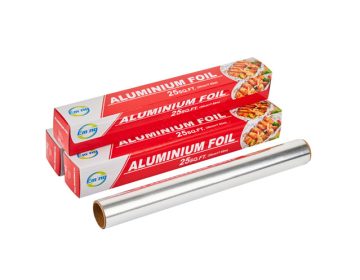
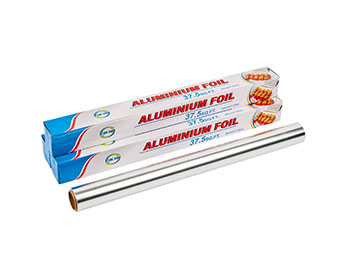
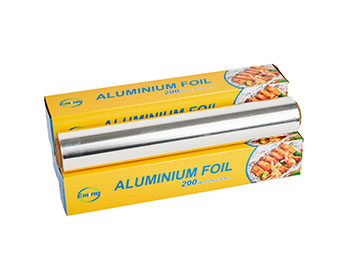
In today’s global packaging industry, aluminum foil roll has become an essential material thanks to its excellent barrier properties, flexibility, and recyclability. From household kitchens to large-scale food processing and pharmaceutical applications, aluminum foil plays a critical role in preserving product quality and extending shelf life. However, one of the most important yet often overlooked factors in selecting aluminum foil is thickness.
Choosing the right thickness for aluminum foil packaging is not just a technical decision—it directly impacts performance, cost efficiency, and customer satisfaction. As demand for customized packaging solutions continues to grow, understanding how thickness influences functionality has become increasingly important for buyers, distributors, and manufacturers alike.
Understanding Aluminum Foil Thickness
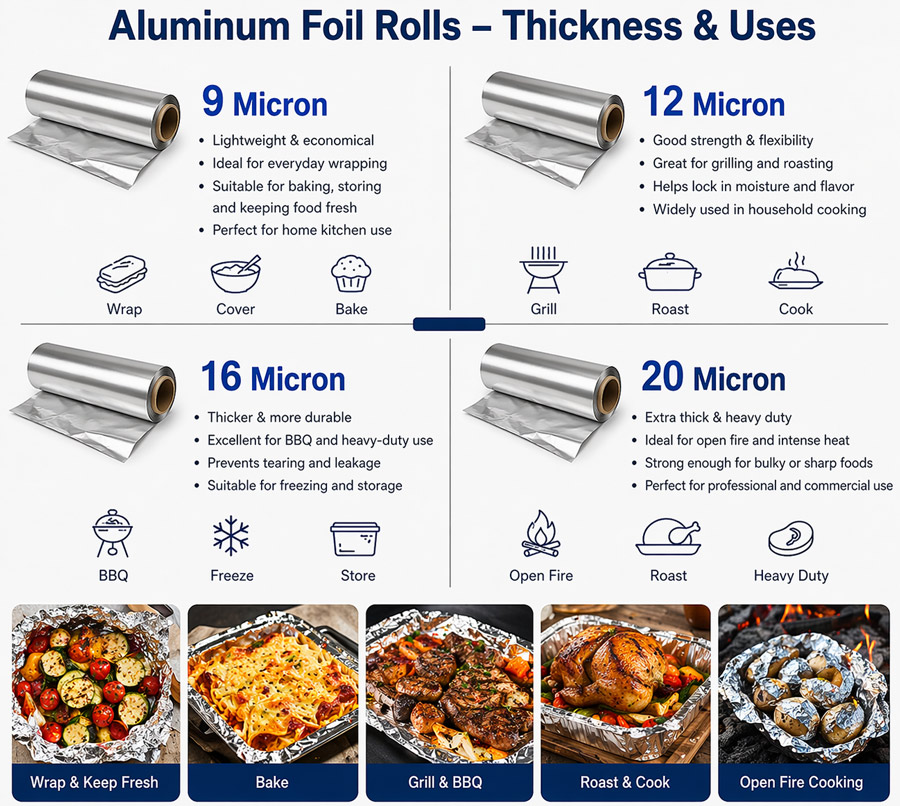
Aluminum foil thickness is typically measured in microns (µm) or mil (1 mil = 25.4 microns). In the global market, especially for household and food packaging applications, thickness generally ranges from 9 microns to 25 microns, depending on the intended use.
● Light gauge foil (9–10 microns): Commonly used for basic wrapping and short-term food storage
● Medium gauge foil (11–15 microns): Suitable for household cooking, baking, and moderate-strength applications
● Heavy-duty foil (16–25 microns): Designed for grilling, freezing, and industrial or commercial use
Each category serves a different purpose, and selecting the wrong thickness can lead to tearing, leakage, or unnecessary material costs.
Choosing Aluminum Foil Thickness by Application
The best thickness depends on what the foil needs to do.
Household Food Wrapping
For household kitchen foil, approximately 9–15 μm can be suitable for many everyday wrapping and storage applications.
If the product is positioned as standard kitchen foil, a thinner specification may provide a good balance between flexibility and cost.
For premium or heavy-duty products, a thicker specification can provide greater resistance to tearing and puncturing.
Baking and Roasting
Baking and roasting generally require more durability than simple food wrapping.
A medium-gauge foil, such as approximately 12–20 μm, may be considered depending on the food, cooking method, and packaging design.
The final specification should be tested under actual use conditions.
Grilling and Barbecue
Grilling places greater mechanical demands on foil because the material may be folded, handled repeatedly, and exposed to heavy or irregular food items.
For heavy-duty grilling applications, 18–25 μm or more may be appropriate depending on the intended use.
The objective is not simply to select the thickest foil, but to choose a specification that provides sufficient tear and puncture resistance without unnecessary material consumption.
Freezing and Food Storage
Frozen food can create additional handling challenges because the material may become more difficult to manipulate around hard or irregular products.
A medium or heavy-gauge foil can therefore be considered when greater durability is required.
The appropriate thickness depends on the product weight, packaging format, storage conditions, and expected handling.
Other Key Factors to Consider When Choosing Thickness
To choose the right thickness, several key factors should be considered.
1. Strength and Durability
Thicker aluminum foil offers greater resistance to punctures and tears. This is particularly important in applications involving sharp-edged foods, such as bones or frozen items. Heavy-duty foil also performs better in high-temperature environments, making it ideal for barbecue and oven use.
On the other hand, thinner foil is more flexible and cost-effective but may not provide sufficient strength for demanding applications. Therefore, balancing durability with budget considerations is key.
2. Barrier Performance
One of aluminum foil’s greatest advantages is its excellent barrier properties against moisture, oxygen, light, and contaminants. While even thin foil provides a good barrier, thicker foil enhances protection, especially in long-term storage or sensitive products like dairy, pharmaceuticals, and ready-to-eat meals.
For businesses involved in food packaging, selecting the right thickness ensures that products remain fresh and safe throughout the supply chain.
3. Cost Efficiency
Material cost is a major consideration for buyers. Thicker foil uses more aluminum, which increases production and purchasing costs. However, choosing foil that is too thin may result in product damage, leading to higher overall losses.
The key is to find a cost-performance balance—using the minimum thickness that still meets functional requirements. Many professional suppliers can assist customers in identifying the most economical solution based on their specific needs.
Across different industries, aluminum foil thickness varies significantly:
● Household foil rolls: Typically 9–15 microns, balancing flexibility and strength
● Commercial aluminum foil: Typically 16–25 microns, offering greater strength and durability.
● Pharmaceutical blister foil: Often thinner but combined with coatings for protection
● Industrial insulation or laminates: May require customized thickness and alloys
These variations highlight the importance of working with an experienced manufacturer who understands diverse application requirements.
How to Choose a Professional Suppliers
For buyers who are unsure which specification to use, working with an experienced aluminum foil manufacturer can simplify the sourcing process. A qualified supplier should be able to recommend suitable thicknesses, widths, alloys, packaging formats, and customized specifications according to the intended application.
Zhengzhou Eming Aluminium Industry Co., Ltd. is a professional aluminum foil roll supplier. With extensive experience in production and export, the company offers a wide range of household aluminum foil products in various thicknesses, widths, and packaging formats. By focusing on quality control and customer-oriented solutions, we can helps clients select the most suitable foil specifications for their markets.
In addition to standard products, professional suppliers often provide:
● OEM and private label packaging
● Customized thickness and size options
● Technical consultation based on application needs
● Compliance with international food safety standards
Such services are essential for distributors, supermarkets, and food service companies aiming to stay competitive in global markets.
Feel free to contact us for more details.
WhatsApp: +8619138193376
Email: eming@emingfoil.com
Related Products